Wednesday, May 20, 2015

GPM partner Sundara brings hygiene through soap recycling to the slums of Mumbai

India's first and only soap recycling initiative has arrived in the slums of Mumbai thanks to a partnership between Sundara and GPM. Sundara, which collects soap from dozens of Mumbai hotels – soap that otherwise would be thrown away, employs and trains local women to recycle into new bars. In a new initiative, the Sundara women have begun to distribute free soap to children, along with specially crafted lessons in hygiene and sanitation. So far over 4,000 children have received soap and hygiene education. This supported by logistical assistance of The Mulshi Springs Water Company.

Sundara is also a major partner in GPM's planned Medical Clicic in Kalwa providing direct access to medical care for 7000 children in the slums, as well as new mothers. Sundara will run hygiene trainings for children and adults in the community in the afternoons from the center.
"Sundara  is thrilled to expand upon its mission to provide sustainable health initiatives for undeserved populations with the help of the GPM team" said Sundara director and founder, Ms. Erin Zaikis.

Hayley Dsouza, GPM Educational Director, delivering an hygiene workshop at Sundara


Monday, March 30, 2015

GPM joins the new Jewish Service coalition OLAM

GPM has been invited to join the newly formed Jewish social justice initiative, OLAM, a shared platform to promote global Jewish service. OLAM, created in partnership between the Alliance for Global Good, Pears Foundation, and Schusterman Family Foundation, that was launched this month in Tel Aviv, aims to strengthen Jewish volunteering and service learning, international development and social justice advocacy by supporting vulnerable communities around the world.

“It is thrilling to be part of this wonderful new collaborative effort that includes so many amazing international service-oriented organizations,” said GPM Founding Director Jacob Sztokman at the OLAM opening conference held at the Tel Aviv Hilton last week, where he facilitated a discussion group about developing empathy in communities.

“It was exciting to be with so many people who care so deeply about development work,” added GPM alumna Rose Pollard, who also attended the conference, where she shared her experiences as a GPM Entwine fellow volunteering in the slums of Mumbai.

OLAM will serve as a field-building resource, championing, coordinating and educating for the benefit of existing organizations, practitioners, and volunteers. It will expand the global Jewish community’s awareness and philanthropic support of these fields; build and strengthen practitioner networks to facilitate sharing knowledge and best practices; and grow the number of volunteers and practitioners and direct them to development work around the globe.

Click HERE  for more information about OLAM

Thursday, March 19, 2015

GPM shares development lessons with Glocal students

“Never give up hope. There is always something you can do to make a real difference in the lives of others. If you live with your heart open, you can find a way to reach out to those who need and make a real change.” These words, written by GPM founder Jacob Sztokman, were featured in a special magazine dedicated to educating students and former-students around the world about community development. The magazine, produced by the Glocal Masters’ Degree program of Hebrew University in Jerusalem, highlighted the work of GPM, and was shared with 30,000 people around the world who work in development.

The current Glocal cohort includes students from Congo, USA, Brazil, Uruguay, Serbia, Uganda, Palestinian Authority and Israel. Jacob is also a proud student, and is scheduled to graduate in January 2016.
“Glocal has been a phenomenal place for me,” Jacob says. “I have acquired vital knowledge and theoretical expertise, engaged in stimulating discussions about development work around the world, and most importantly met the most inspiring people who are all dedicating their lives to making the world a better place. I’m deeply honored that Glocal chose to feature the work of GPM. It means so much to me.”

Tuesday, March 17, 2015

Special chocolates: Sweet volunteering with special women

GPM-Entwine fellows volunteered last week with developmentally challenged women at Om creations in South Mumbai. GPM fellows worked side by side with Om members to create and package chocolates for sale throughout Mumbai.

Om Creations is a NGO founded to provide professional training and support to women born with Downs’ syndrome and other mental disabilities in order enable the women to work professionally and be fully active members of society. The organization is self-sustaining, with baking, handicrafts, painting, and more.

The GPM volunteers, together with the women of Om Creations, made hundreds of chocolates for business clients.

“The women of Om Creations were extremely friendly and welcoming, which inspired us and made the work fun,” said Leya Ellias, GPM Program Director. “We were all talking and chatting the whole time, and it was a great environment.”

This was the first collaboration between GPM and Om Creations, and plans are underway to continue this project and expand opportunities for collaboration.

Friday, March 6, 2015

When Purim and Holi fall out on the same day!

This year, the Jewish holiday of Purim and the Hindu holiday of Holi (Duli Vadan) fall out on the same day, highlighting some fun and some serious shared aspects of the two cultures. Both holidays are colorful and exuberant, with people turning the streets upside down in playful festivity. In Holi, Indians celebrate by throwing bright colored powder (Abeer) on each other, while on Purim, Jews celebrate victory over the destructive Haman by dressing in costume and make-up and sending sweets to each other.

Another major shared characteristic of the two holidays is the idea of standing up to evil in order to achieve great good. On Purim Jews revel in Esther’s courage to stand up to a powerful tyrant bent on genocide. During Holi Hindus commemorate the salvation of a pious son (Prahlada) over his tyrannical demon father. Through the Purim Seuda and Holi Milan, celebrants emphasize the ideas that people belong to the same global human network, connected by a commitment to goodness and determination to act in the face of evil. As Mahatma Gandhi said, ‘“Be the change that you wish to see in the world.”

Happy Purim and Happy Holi to us all!

Emily during Holi
Purim party at Chabad of Mumbai

Thursday, March 5, 2015

Food Packages for Needy Families in Mumbai this Purim

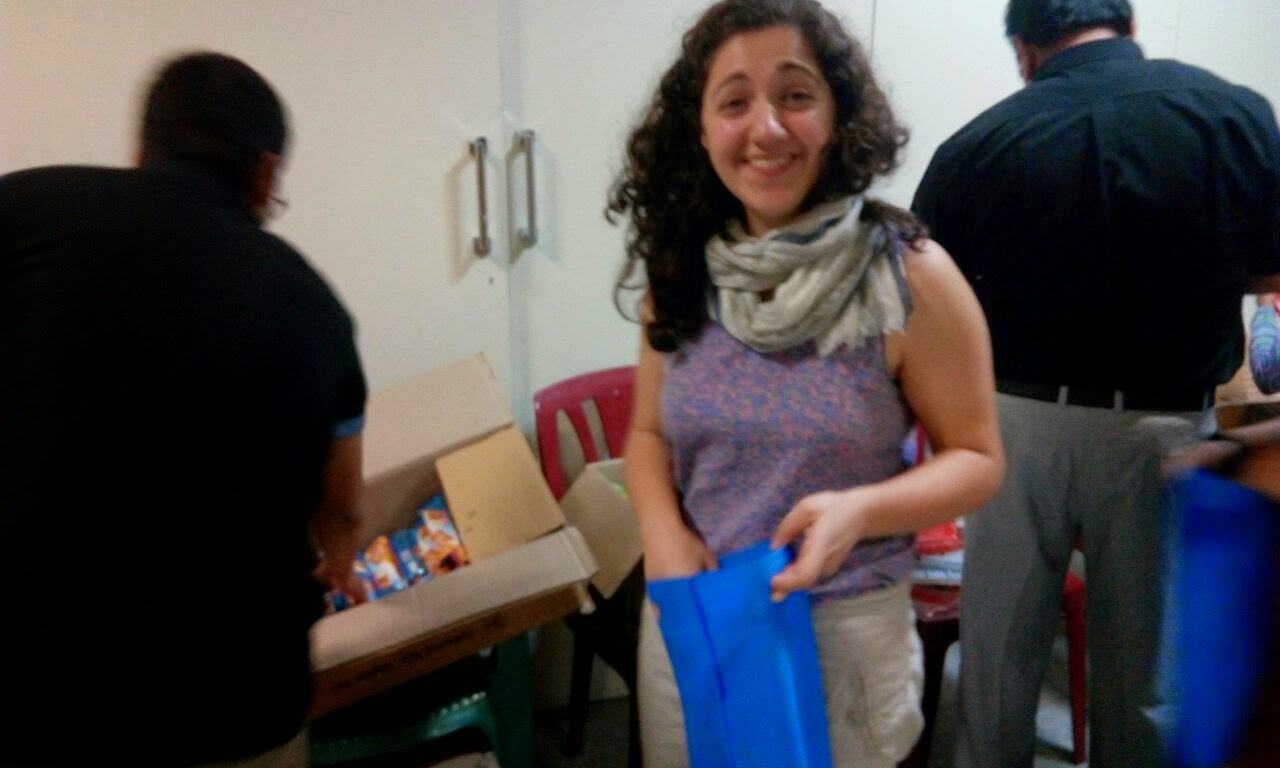
On the eve of Purim, Gabriel Project Mumbai volunteers, JDC India staff and members of the Mumbai Jewish Community came together to assemble mishloach manot and matanot levyonim packages - holiday gifts and food packages for 50 poor Jewish families and elderly. Packages consisting of basic staples such as rice, lentils, oil, flour, salt, sugar, milk and tea, were delivered to fifty families in the Jewish community. The money for the project was collected from GPM alumni and friends. The current cohort of international volunteers spent the day with local Jewish youth on packaging and delivery throughout the city of Mumbai and the district of Thane. A lot of fun was had by all!


Sharing Ideals: Gabriel Project Mumbai and Tzedek UK

Education, Service, Development and Care are four principles shared by the UK based organisation
Tzedek and Gabriel Project Mumbai’s activities in the slums of India. Tzedek is the British Jewish community’s response to extreme poverty. Tzedek ensures the community plays its part through practical support to local partners in Ghana and India; always aiming to help some of the world’s poorest help themselves out of poverty. Gabriel Project Mumbai (GPM) is an innovative project providing nutrition, literacy support, health and hygiene to children in the slums of India.

Tzedek and GPM have a deep respect for each other’s work and are beginning to build mutual support. Through the sharing of educational resources and by providing volunteer opportunities, we will work to promote awareness, service and development for vulnerable children and communities facing the many challenges of extreme poverty.

This is a great opportunity to advance the core value of tikkun olam in the developing world.

To find out more information about Tzedek’s activities go to  http://tzedek.org.uk/

Monday, February 23, 2015

Interview with Emily Weinstein: GPM-JDC fellow Spring 2015

Emily Weinstein, a 23-year-old graduate of Fordham University graduate and New Jersey native, is a participant in the current 12th cohort of GPM international volunteers. Emily brings with her a wealth of experience in international volunteering, and some profound insights into development work. In an interview with GPM founding director Jacob Sztokman, she talks about her love of the children she is working with and the impact of her encounters with the Jewish community of India – and she says that GPM is unlike any other volunteer program that she has been part of. Read the rest of the interview to find out why.,,

J: Welcome Emily. How are you?
E: I’m excited to be here
J: Tell me about yourself. Where are you from?
E: My parents live in New Jersey. I’m originally from New York. I went to Fordham University in New York, studying anthropology, visual arts and photography, a little bit of everything.
J: So you’ve been here for two weeks now. What made you decide to come on GPM?
E: I had done volunteer programs before. I had worked in Ghana briefly. It was a wonderful experience, to tell you the truth. But I really like GPM. It is really different. First of all, working together with the Jewish community in India is really different. It’s not just someone coming in from the west, having no knowledge about India. I mean, I knew a little bit about India. But working with the Jewish staff, I felt like I was coming in to a community that I had familiarity with, at least on that level.
J: Instead of feeling like a foreigner, it’s more like you’re coming in to a community that you have a connection with?
E: Exactly. We have something in common, so it just made it that much easier to be in India and integrate into my surroundings. Also, I love working with children. And that’s part of the reason why I was so attracted to this program. I didn’t know so much about the slums or about the poverty situation in India. Coming in to see that has been pretty drastic, a little traumatic. But it’s great to feel like I’m part of something that’s working to remedy that in some small way.
J: What was your reaction to the slums?
E: When I first got there, it was worse than I was expecting. The hardest part is seeing the children and how the situation affects them. I mean, there are some children in our class who are sick, and it seems like they are perpetually ill. Like one child, sometimes during games she has to sit out because she can’t. A lot of the children seem, I guess, delayed. I was a babysitter in the United States for over a decade so I’ve worked with lots of children, and I know where they should be at that point in their lives. These children are far behind and it’s hard to see that. We come in and we bring these lessons and we ehope that they gain something from the information that we’re bringing. But maybe the most important thing is that someone is thinking about them outside of their world. Maybe that’s really the most important thing.
J: The slums were worse than you thought
E: I mean, it’s exactly what you told us it would be. But imagining and seeing are two totally different things. It’s difficult to process.
J: Last weekend GPM took the children to a park for an activity with the local Jewish interns. How was that?
E: It was amazing to see the children. The park was near the ocean. Even I was taken aback by how beautiful it was. Many of the children had never seen the ocean before. To see the children’s reactions was very special.
The program itself working with the local Jewish staff members was really great. The lessons we were delivering were about health and about fruit and vegetables. The kids were so sweet and they loved the lessons and picked it all up very quickly. They were so happy just to see us here. It was really great. I mean, I was a little nervous coming in. I didn’t know how we would be received as volunteers. It was a new experience for me to work with a local staff. But they are all so professional and well prepared and they really know what they are doing and they made us feel really comfortable. It was a great introduction for us to working with the kids. It was our first time really running a program. It was really amazing. I really enjoyed it.
J: So you worked in Ghana before this?
E: I was working at a human rights law office. It was through a UK volunteer organization. I worked on three projects. In one, we would go into local high schools in Accra and teach a curriculum about the Universal Declaration of Human Rights. In the second, we also worked on a women’s outreach program. And we would go into communities and speak to women, usually older women in traditional communities where most men have multiple wives. Ghana only recognizes one wife, so once the man dies, if he doesn’t have a will, there are a lot of times when women and children are left with nothing. We would teach the women about the laws and about wills and we had a pro bono lawyer helping the women with wills. The third program was working with children on a child trafficking. We would go in and work with children, a lot of older boys who had been trafficked, who lost very important years when they should have been in schools. We had 18 year old boys reading and writing at a first and second grade level. So what we did was we came in and found out how well they were reading and writing and we were able to report to the teachers.
J: Why did you choose to volunteer instead of just going to university or traveling?
E: I was at university at the time that I went to Ghana. It was between my freshman and sophomore years. I knew I was interested in humanitarian and development work. I was working at the time with an Ethiopian non-profit. I had been working with them since my freshman year of college. And I really wanted to go to Africa and see the situation there. I originally wanted to go to Ethiopia because that was my experience. It was my colleagues and the culture that I was engrossed in. I stumbled upon this program in Ghana in human rights and I’ve always been passionate about human rights so it seemed like the perfect fit, so that’s how I ended up in Ghana.
In terms of GPM, so I had initially applied for a yearlong fellowship in JDC in Ethiopia, but the position was taken. But it all worked out – because I ended up in this amazing program in India! And my mother likes to remind me, she says, ‘You wrote a report on India when you were in fourth grade!’ So I knew basic things about India. I knew a little about Gandhi, about caste systems, and Hinduism. And I knew the slums existed but I didn’t know much about them. And I learned about this opportunity to really work with children, which is a major passion of mine. So I said it sounds like the perfect program for me!
J: So what’s next for you?
E: Trying to figure that out myself, every day. Right now I’ve been giving a lot of thought to the whole humanitarian versus development aspect of my career. I’m very passionate about it. But there are a lot of things about working in a career where you, as a westerner, come into developing countries, it’s hard for me and I’m having trouble with that. So that’s why I like being a photographer. I like going in and taking pictures of the program and helping organizations like GPM promote their programs. I want to help spread the word so that people like me who are passionate about it can find out about it and hopefully participate and make a difference. That’s kind of where I see myself
J: You’re saying that you have an issue with westerners coming in and doing development for local people?
E: I have an issue when they come in and don’t work with local people. That’s why I like GPM so much, because I think that it’s an amazing organization. It brings in volunteers from all over the world. It doesn’t have to be just western volunteers. The local staff, they are so amazing, they have been so helpful and so influential. All of our skills that we have been able to bring have been enhanced and complemented by them. We need each other. I think that’s one of the reasons why GPM is so successful
For me, as someone growing up wanting to go in and help people who have so much less than I did, I went to school and started studying I’m trying to find my place in this industry.
I don’t always love volunteer programs but I really love GPM. I think a large part of it is that you found a wonderful staff. They really empowered us to do so much. You created a wonderful model. I’m so happy that JDC gave me the opportunity to do this. They made this happen for me.
J: Thanks so much Emily.


Sunday, February 8, 2015

What we learn from children in Mumbai

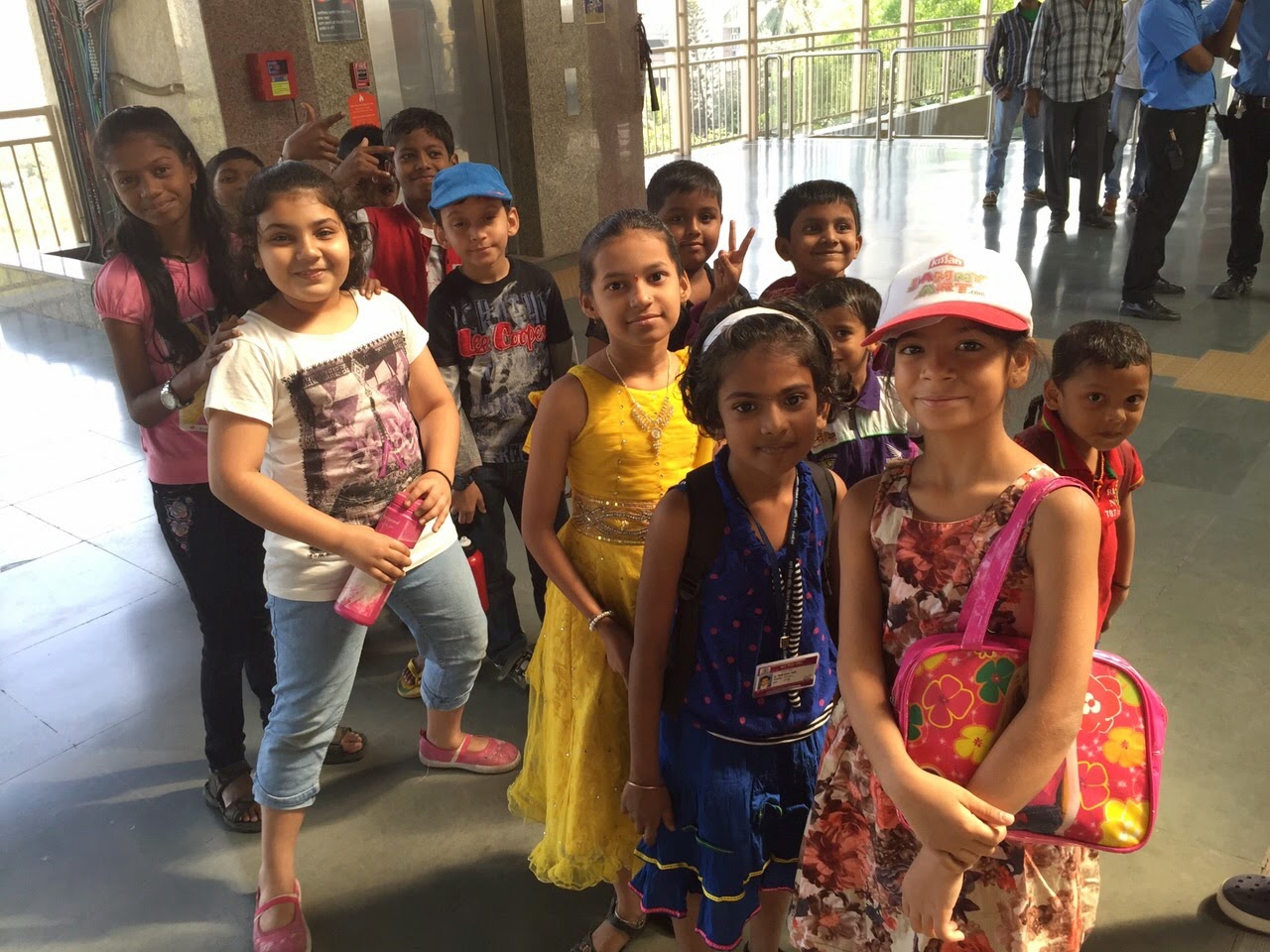
This week’s GPM-JDC Internship was even more inspiring than usual! GPM-JDC intern, Seema Dhokarkar developed a fantastic day of fun and learning for 30 children from the Kalva slums. Joining them was a group of children from the Jewish community’s Gann Kattan Sunday school class! The group spent the day at the Metro Train and Bhakti Park where they learned about the Indian Railways, Indian geography and landmarks and heard stories encouraging honesty and fairness.

But what was so inspirational was the way the children interacted with each other. The two groups of children come from totally different socio-economic backgrounds, they live in different realities and have different challenges in life. It took them 10 minutes to bridge the gaps in their differences and to start enjoying the day together. There was a lot of laughter, camaraderie and team work.

The ease in the way the children with so many differences became instant friends is a message for us all.
Salome Abraham, Deputy Manager of Programmes at JDC India noted that “ this is a program where the children end up giving life's very important lessons to us more than we can ever teach them by just being themselves. Their real selves unadulterated by the ways of the world and this picnic of the two groups is a classic example. They enjoy with each other without being bound by the background they come from. They converse and mingle without any inhibition and nor do they care about it.

Nikita Worlikar, volunteer internship coordinator said “It is always amazing to see that children interact without any inhibitions...  There is such innocence and purity in their acceptance of each other...  As long as they play and get along, they are friends without even the consideration of their social difference as the world has created it for itself.  Each one of them have thing to share with each other making this interaction enriching for all the children....

GPM co-coordinator Leya Elias commented on It feel how she felt “really great to see the passion that every volunteer has and the effort that they put in for the sessions that they take. Everyone is so involved and dedicated in the sessions to make it fun and educational for the kids. The children are always excited to be with the volunteers and engrossed in the activities. It is really ‘Funday-Sunday’ for the kids as well as for the volunteers.