Sunday, April 30, 2023

Gabriel Project Mumbai honored by the government in Mokhada

Gabriel Project Mumbai was honored to receive a certificate of appreciation from the Deputy Executive Magistrate (Nayab Tahsil), Mr Kakasaheb Thakare, of the sub-district of Mokhada on behalf of the 

Gabriel Project Mumbai and IsraAID team in their work providing social protections for Adivasi (tribal) communities in rural India.

For the past year the conscientious team of 16 social workers have gone out to the villages, homes and fields explaining the citizen rights, gathering documentation and applying for government services for the tribal communities of Mokhada.

Recently, the GPM-IsraAID team referred to in Marathi as ‘Adivasi Lokseva Kendra’ or ‘Tribal Rights Service Center’ secured the pensions of 200 individuals, registered birth and tribal status certificates for 5,000 people and applied for agriculture grants for hundreds of farmers. Referrals to psycho-social services were made to residents from government entities in various public health fields.

“The impact on the lives of thousands of (historically marginalized) tribal and landless people is great” said Mr Thakare. “Thank you for all your hard work!”

The teams going out to the 56 villages and hamlets do so in all kinds of weather. Last week the temperatures reached 44C/112F!). Soon the teams will endure heavy monsoon rains in their work providing essential services to the tribal communities.

Kudos to this dedicated team at GPM!


Sunday, April 16, 2023

Free oral cancer screening program for thousands of people by GPM and the Indian Dental Association

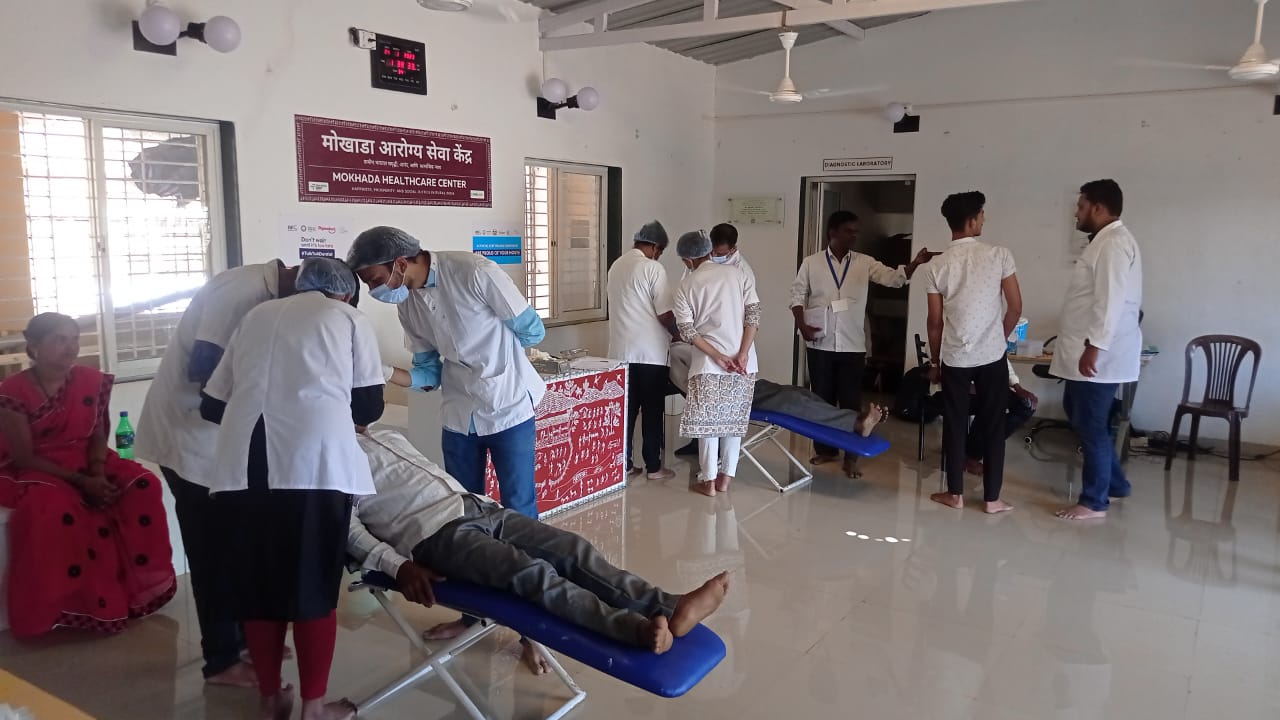
A free oral cancer screening program for thousands of people living in underserved villages in Maharashtra took place in March. As part of the state-wide Maharashtra Oral Cancer Campaign (MOCC), Gabriel Project Mumbai and the Indian Dental Association (IDA), provided life-saving oral health awareness and treatment in 40 remote underserved hamlets in the Mokhada sub-district. 

As part of the MOCC, specialist dentists and doctors provided services free of cost and additional referrals for specific complex treatments. Of the 2000 people participating in the program, 84 patients with signs of oral cancer were given cancer biopsies. These biopsies were sent to laboratories for analysis. Additional dental care activities based at the GPM ‘Mokhada Community Health Center’ included home visits, blood samples, scaling, extractions, and GIC restoration (filling of cavities and fixing tooth deformities).

“The ongoing oral health care program spearheaded by GPM and the IDA is saving many lives from oral cancer by treating the cancers at an early stage and, most importantly, through education and community awareness, said GPM India Director Kenneth Dsouza. “Preventive health care is the key to long-term health of our community service participants.”

The first phase in this program, which took place in July 2022, was the “Oral Health Screening Camp”


in which over 2000 patients from 40 hamlets Mokhada were screened for oral cancer and provided with individualized follow-up treatment plans.

The second phase that took place in March 2023 focused on the people in need of treatment or those showing symptoms of oral cancer. Patients from the North and the South will be brought to the health center for counselling, blood tests, biopsy, and basic treatment. 

Phase three will focus on the treatment of those based in south Mokhada along with counselling of patients.


GPM medical staff and Indian Dental Association dental staff go over logistics of the oral healthcare screenings 


Monday, February 6, 2023

GPM save lives by training First Responders in rural India

Over 2,200 people died last year in India due to natural disasters and extreme weather events. Heavy monsoon rains, flooding, and extreme tropical cyclones are devastating, but people living in underserved


urban and rural communities are most negatively affected. Those without stable homes, infrastructure, and resources to construct protections from the elements are the most vulnerable and at risk of devastating tragedy.

The GPM Rural Emergency Response Program that began during Covid has launched a  ‘First Responders’ training course to support the 57 villages of Mokhada in times of natural disasters. The training course, which takes place at the GPM medical clinic, the Mokhada Community Healthcare Center, is being taught by expert government trainers to fifty participants, including five GPM staff, in life-saving methods and
techniques to use in climate emergencies.  

“We hope that this cohort of first responders will receive the knowledge and skills that they need to save lives of people living in Mokhada,” said GPM India director Kenneth Dsouza. “I’m proud that we at GPM are able to serve the community in such a vital and meaningful way.”


Tuesday, January 31, 2023

GPM once again receives Candid's Gold Seal of Transparency (2023)

We are so happy to have achieved, once again, Candid’s Gold Seal of Transparency status for 2023
(previously recognized as GuidStar’s Gold Seal of Transparency)! 

Gabriel Project Mumbai’s top priority is to utilize every donation it receives for the benefit of the communities we serve and to make the biggest impact on the health, education, livelihood and health of these underserved communities. Candid’s Gold Seal of Transparency highlights the high standards of responsible fiscal management and accountability we have running our programs in India!

Sunday, January 22, 2023

GPM and IsraAID promoting mental health in vulnerable communities in India

IsraAID mental health professional Anva Ratzon is delivering Mental Health and Psychosocial Support (MHPSS) trainings to Gabriel Project Mumbai teams in order to equip them for working in the tribal communities in India. The two-week training will provide GPM staff with skills and techniques for supporting the community in regulating stress and promoting self-care.  

Ms Ratzon delivering trainings on MHPSS at GPM Center

The critical issue of mental health is often overlooked in marginalized communities that are experiencing the emotional and psychological stresses of living in extreme poverty. 

“How can we talk about mental health in a community with no food or livelihood security?” posed Ms. Ratzon, a social worker specializing in community MHPSS, to the participants. “These communities are the ones that most need resources to manage their own mental health,” she emphasized.

“There is a general fear amongst community members that working on mental health is akin to having a

GPM Social Protection Team in a break during trainings

mental illness, and that has its own taboos,” explains GPM Programs Director, Thaiza Dias. “Thanks to these IsraAID trainings, our staff will be able to bring awareness of the importance of mental health, dispel myths and taboos, and encourage mental self-care.” 

Ms. Ratzon has visited several primary health centers in the sub-district of Mokhada that GPM is working with, and has sat with government health workers, village leaders to evaluate a general needs assessment of the villages in Mokhada. 

The MHPSS trainings will be taking place over the next few weeks, with follow-up throughout the year. GPM staff, who have been engaged in community social protection awareness campaigns through an ongoing partnership with IsraAID – will now be able to offer mental health and psychosocial support to 56 tribal communities.  


Anva Ratzon visiting Washala Primary Health Center, Mokhada


Monday, January 16, 2023

Innovative STEM tablets educate children in rural India

For the first time in the tribal villages of Mokhada, Israeli created ‘Einstein Tablets’ with innovative measurement censors have been used by Gabriel Project Mumbai team of educators to teach science, chemistry and physics in rural government boarding schools in India.

Over 2500 children aged 12-16 are part of GPM’s ‘SCI-MA’ program, spending the academic year with GPM’s creative science curriculum, performing advanced science experiments using the Einstein Tablets and 16 different internal and external measurement censors from Fourier Education. 

Big thanks to the Israel Consulate in Mumbai, Deputy Consul Dahlia Neumann and trainer Eyal at Fourier Education for donating the “built-in science lab” tablets and censors and for the trainings that took place at the Israel Consulate, Mumbai and via zoom in the rural villages of Mokhada. GPM is also grateful to the local educational authorities for adopting the GPM science and math programs in their schools.

“It is wonderful to see the intersection of corporations, local and foreign government bodies and GPM coming together to provide vital STEM education for children from marginalized tribal communities”, said Rohit Jadhav, SCI-MA Supervisor. “Science education is so very important for the future careers of the children and important for the sustainable growth of the communities.”

We hope to use more Einstein Tabs to advance science learning in underserved communities in India.

Deputy Consul, Israel Consulate, Mumbai Dahlia Neumann with GPM educators during a training on the Einstein Tablets


Monday, January 9, 2023

GPM launches groundbreaking environment action program in Indian schools

Gabriel Project Mumbai (GPM) has been selected to launch an exciting new Environmental Educational Program in order to redress the issues of environmental injustice that profoundly impact the tribal communities of Maharashtra.

 The Environmental Education Program, which is being launched this month in the district of Palghar in the state of Maharashtra, aims to embed environment awareness, Sustainable Development Goals (SDGs), and climate action within the existing primary school curriculum (grades 1 through 8) across 10 districts in Maharashtra state. This project, which is being initiated by the Centre for Environment Education and UNICEF Maharashtra India, is a collaboration with the Indian Government education department. Gabriel Project and its local entity, the Grameen First Development Foundation, were selected as the lead coordinator for the Palghar district of four million people.

“This initiative promotes joyful and experiential learning around crucial environmental issues,” explains GPM Director Kenneth D’Souza. “In embedding environmental education in rural development, we are addressing several key intersecting issues, as well as several SDGs at once. Often, the most vulnerable communities, who struggle with poverty, health neglect, and lack of infrastructure, are also the most negatively affected by climate change. We see that, for example, with issues of


drought and extreme weather and their devastating impact on rural communities. We are looking to address root causes of environmental justice where it is most needed, first by investing in education for awareness.”

The Environmental Education training, which takes place over four months, has already trained 11 Master Trainers who in turn are training 1100 teachers in their sub-districts (talukas). The next stage will be to select “Lighthouse Schools” who will be leaders of this project in each district.

Other schools and teachers may consult and seek guidance from the ‘Lighthouse school’ to implement this project in their own schools. The program will eventually reach thousands of master educators in Palghar and create a comprehensive systemic change.

“This educational initiative will not only bring awareness of the climate problem to tribal children but will also see a generation of new thinkers and changemakers from within the tribal communities who will be environment-advocates and climate-action-warriors for their homeland and their communities,” Mr. D’Souza adds.

The program also anticipates rewriting parts of the government’s syllabus to include environmental
awareness, sustainability, and climate change.

“The Environmental Education Program will have a long-term impact on climate, sustainability, and communal development,” says GPM Founding Director Jacob Sztokman. “It will influence the health and well-being of marginalized communities for generations to come.”

This program also forms a powerful model for collaboration between GPM the Indian government, Ministry of Education, UNICEF, and local grass-roots partners, which is a core GPM value. It also uses a climate action mindset while respecting local culture, customs and tribal heritage, which also form core GPM values.

The 1100 schools in Palghar district participating in the current pilot are almost half of the government schools in Palghar. When the pilot is finished, plans are to expand to the entire district. The program is scalable and ultimately has the potential to be implemented in school districts throughout India.

Wednesday, December 28, 2022

Every girl deserves the educational and career opportunities that offer them a better life

Since its inception, GPM has focused on girls education. In many historically marginalized communities in slums and underserved villages, the challenges faced by girls can sometimes seem insurmountable. Challenges include:

  • preference for families to educate only male children (The average female literacy rate in India is 62.3% for women as compared to 80% for men)
  • girls forced into early marriages (102 million married before the age of 15 last year)
  • cultural attitudes and financial constraints around girl's menstruation that keeps girls away from school during their period (one out of five girls say that they miss school during their period).
  • extreme poverty forcing families to send their girls to child labor and drop out of school (10.1 million child laborers are reported in India, one of the highest in the world.)
  • general cultural attitudes that girls and women should focus on household/farming chores and not pursue an education (India has one of the lowest female labor force participation rates in the world; 21% of women in India over the age of 15 participate in the labor force).
  • lack of female hygiene products in schools and home that hinders school attendance and causes girls to drop out of school (Every year more than 23 million girls in India drop out of school due to the lack of necessary products and hygiene education)
Gabriel Project Mumbai has been working to counter these awful trends through:
  • Grants for girls. Helping families receive government grants towards paying for their daughters’


  • educations
  • Girls STEM. Teaching STEM (Science and Math) subjects to girls and guiding girls towards higher learning in the Sciences
  • Menstrual support. Distributing female hygiene products in schools and in the villages in coordination with the local government health authorities
  • Female hygiene training. Teaching a comprehensive hygiene education curriculum in schools and to young mothers
  • Community education. Providing outreach to communities about the importance of girl’s education
  • Combatting child labor practices. Coordinating community level campaigns combatting child labor in hundreds of remote villages

Every girl deserves the educational and career opportunities that offer them a better life.


Please join Gabriel Project Mumbai in promoting girls’ education to hundreds of girls living in underserved communities in India!

Donate today: https://www.gabrielprojectmumbai.org/donate 

Sunday, August 7, 2022

Israel Consul General, Kobbi Shoshani visits Gabriel Project programs in tribal communities in India

Preferring to sit on the floor with the rest of the Gabriel Project Mumbai staff in the tribal area of Mokhada, Israel Consul General Kobbi Shoshani expressed his love for India, the culture, and his admiration for the impact Gabriel Project is making in the area.


“What amazing life-saving work you do”, said Mr Shoshani addressing the Gabriel Project team that cooks and delivers daily nutritious food to a hundred infants diagnosed with acute malnutrition.

At the Mokhada Rural Hospital, the only major hospital in the area serving a population of 180,000,Mr. Shoshani toured the site of the oxygen plant set-up by Gabriel Project and Israeli organization, IsraAID, to supply oxygen to the 30-bed ward where patients receive piped oxygen at their bedside. At the Nutritional Rehabilitation Center (NRC) Dr Mahesh Pail, Medical Superintendent of the Mokhada


Rural Hospital explained medical and nutritional challenges faced by many tribal families and praised GPM’s nutrition and health outreach programs at the NRC and in the surrounding villages.

“It is so inspiring to see Gabriel Project working so closely with the government health bodies”, said Mr Shoshani while at the only major hospital for 180,000 people. “This is a perfect example of how NGO’s can work with government for the sake of the people they serve.”

Next stop was to the center of the Mokhada market place, where the entourage entered GPMs office for processing grants and registering for essential government social services. Mr Shoshani handed out grant certificates to several residents and learned about the ambitious expansion of these services to all 59 villages of Mokhada; a GPM-IsraAID initiative.


Mr Shoshani visited GPMs village industry center where different women’s livelihood collectives produce various goods for sale. At the GPM showroom the Consul General purchased several items in support of the collectives.

At the Hirve Government Residential School, Mr Shoshani inaugurated GPM’s innovative STEM (Science, Technology Engineering and Math) program for all 2100 7th -12th graders in the district government high-schools.

“The visit of the Consul General of Israel encourages and inspires our staff to do even more for the tribal people of Mokhada,” said GPM Senior Manager of Programs Thaiza Dias. “When dignitaries from far away come to visit our programs and communities, it boosts the morale of our local team members and validates our work. For the communities we serve, the Consul Generals’ visit helps widen their horizons and sends the message that development is not beyond their reach.”