Friday, March 11, 2022

Clean drinking water for rural hospitals in tribal areas

For patients and staff of emergency medical facilities in remote tribal villages, the last thing they need to worry about is if the water they are drinking is safe.

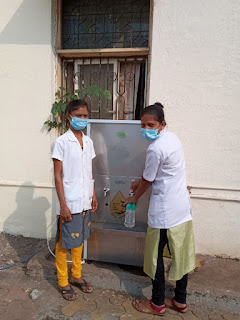
GPM thanks long-term corporate partner Eureka Forbes for working with us to supply clean-water purification units to eight primary health care centers and a government rural hospital in the tribal districts where GPM operates.

Eureka Forbes Institute of Environment technicians and GPM staff installed four water purifying units in the Mokhada subdistrict Primary Health Centers of Washala, Moranda, Ase and Khodala and the Jawhar subdistrict Primary Health Centers in Jambsar, Sakur, Nandgaon and Sakerasat. These water purifying units provide 80-100 patients and medical staff with safe-drinking water, every day.

A larger water-purifying unit, with a 150-use capacity was installed in the only public hospital in Mokhada, the Mokhada Rural Hospital (MRH).

Eureka Forbes has graciously provided all units with a year free maintenance contract and Gabriel Project staff check and manage the water -purifying units on a weekly basis to make sure that the patients and medical staff have safe-drinking water, at all times, in these medical facilities.  


Sunday, February 6, 2022

Critical patients now have oxygen 24/7

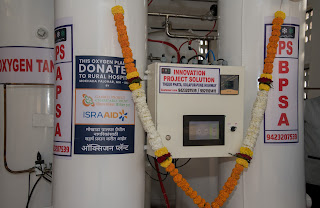
Gabriel Project Mumbai (GPM) celebrated Indian Republic Day by hosting a handover ceremony at the Mokhada Rural Hospital for a brand-new Oxygen Plant.  The Oxygen Plant, manufactured in India, was funded through a partnership with Gabriel Project Mumbai, IsraAID and UJA Federation of New York.  Originally installed in July 2021 to treat critical COVID-19 cases during the devastating ‘second wave,’ the facility will now be available to the community. “During COVID and beyond the pandemic, we will be able to give highly concentrated oxygen to those patients critically in need of oxygen for their treatment,” said Dr. Mahesh Patil, Medical Superintendent of the Mokhada Rural Government District Hospital. 

Ribbon cut by Member of State Parliament, Honorable Shri. Sunil Bhusara and Deputy Collector Mrs Ayushi Singh

Palghar District health authorities and government officials attended the handover ceremony. Member of State Parliament, Honorable Shri. Sunil Bhusara thanked Gabriel Project and IsraAID for their critical support during the COVID pandemic- " This Oxygen plant has saved many lives, helping people who are most in need during one of the most critical periods of time,” said Shri. Bhusara. “Thank you to Gabriel Project.”  

Also in attendance was Dr. Sanjay Bodhade, District Civil Surgeon, Shri. Dilip Gutte, Assistant Collector, Smt. Ayushi Singh, Deputy Collector, Dr. Rajendra Kelkar, Assistant District Civil Surgeon, local media and GPM staff.


Member of State Parliament, Honorable Shri. Sunil Bhusara


Wednesday, February 2, 2022

GPM opens a medical center in tribal district of Mokhada

Today Gabriel Project Mumbai opens the doors of the Mokhada Community Health Center (Mokhada Aarogya Seva Kendra) in the Mokhada tribal district of Palghar, Maharashtra.

Mokhada Community Health Center / Mokhada Aarogya Seva Kendra

Four years ago, Gabriel Project Mumbai (GPM) began working in the tribal district of Mokhada, just a 4 hours’ drive from the slums of Kalwa. We expanded to this remote rural area as the 59 villages there were experiencing extreme poverty with severe child malnutrition, starvation and with little access to any healthcare! With 40% migration from villages in Maharashtra to Mumbai, many of the residents of Mokhada had migrated to the slums in Mumbai and Thane in a last move of desperation in the face of extreme poverty.

We set up food distributions, nutrition programs and emergency health treatments. 

While we know that the food distributions helped significantly with hunger, we quickly began to realize that nutritional needs are just the beginning. We kept seeing sick, unhealthy people with no access to any kind of medical professionals, which meant that emergency medical needs, communicable diseases, and treatable conditions like dysentery were causing high rates of illness and death. It also meant that people with chronic illnesses or noncommunicable diseases, like high blood pressure or diabetes, had no chance of getting better or controlling their symptoms. After countless discussions and research in the region, we decided to open a Healthcare Center located in the heart of the Mokhada district. It is a vital component in advancing a long-term vision for health and hygiene for the members of the community. 

With Israel Consul General, Mr Kobbi Shoshani outside the Mokhada Community Healthcare Center

The beautiful five-room medical center we built on a 1.5-acre central location in Mokhada is a vibrant center for health in the district. One room houses a diagnostic center for blood testing and vaccinations (sponsored by the Minkus family of Chicago and UJA Fed of New York) while another room contains an emergency dental clinic sponsored by the estate of Martha B Leigh). The other consulting rooms lead to a large hall used for patients and for after-hours training of medical staff. The medical center has been visited by the Deputy Collector of Palghar, Ms Ayoushi Singh and we are partnering with the Dr. Vasantrao Pawar Medical College in Nashik for ongoing medical programs at the medical center. Recently, we completed a large-scale oral health screening with the Indian Dental Association and a menstrual hygiene project with the Citizens Association for Child Rights (CACR) including a distribution of sanitary pads to 3200 adolescent girls. The medical center also works closely with government health bodies like the Integrated Child Development Service (ICDS), Mokhada Rural Hospital and the Nutrition Rehabilitation Center (NRC).


Wednesday, May 26, 2021

COVID-19 emergency help from the UJA-Federation of New York

GPM is grateful for a $45,000 grant from the UJA-Federation of New York towards GPM’s grassroots COVID-19 Emergency Response in the slums of Mumbai and the rural tribal villages in Palghar, Maharashtra, just north of Mumbai. The grant will provide urgent food and medical supplies and especially help with establishing our new COVID-19 vaccination center!


Additional funds of $45,000 were allocated to our partner IsraAID that will help procure medical equipment launch remote stress and trauma prevention programs and assess long-term public health needs.

"We are indebted to both UJA-Federation of New York and IsraAID for their strong partnerships in helping GPM in treating and saving lives during this COVID-19 crisis in India," said Kenneth Dsouza, Director of GPM in India." The outpouring of support for our grassroots COVID-19 relief work in vulnerable communities, from the UJA-Federation of New York and others around the world is greatly appreciated and inspires us on the ground to work harder in saving lives."

“It’s heartbreaking to see the scenes from India today, and we hope our aid will spur others to join the relief effort,” said Eric S. Goldstein, CEO, UJA-Federation of New York.

To support this urgent life-saving work in India, please donate here. https://rootfunding.com/campaigns/gpm_corona_virus_campaign


Thursday, May 13, 2021

GPM teams up with IsraAID for emergency COVID-19 response in India

IsraAID, an international non-governmental humanitarian aid organization based in Israel, has joined GPM to roll out an urgent emergency response program to stop the spread of COVID-19. As India is currently in the throes of a devastating surge of COVID-19 cases, including severe spikes in critical cases and fatalities, we are on the ground responding to and mitigating critical needs in the areas we operate, particularly within the hard-hit indigenous rural communities. Anil Jadhav, one of our village supervisors, reports that, “Every second house in the villages has someone suffering with COVID-19." 

Our COVID-19 emergency response plan is innovative, far-reaching, and multi-pronged in order to address the cross-cutting challenges in halting the spread of COVID-19, and as always will continue to focus on providing the necessary care to low income families living in hard to reach locations. 


Together with our partners at IsraAID, we are working to extend support and strengthen resilience of communities within remote villages, and increase capacity of the local government health care infrastructure. We are coordinating with the local health authorities, including the District Health Office (DHO) to ensure rural hospitals and COVID-19 Care Centers have the medical equipment, supplies, and medical professionals needed to serve a rural population of nearly 4.2 million people. Currently there is about 1 doctor to every 50-100 patients in the areas we are working. 

Together in partnership with community leaders we are extending our community outreach work, providing important COVID-19 information to communities, and emergency groceries and health and hygiene kits to those in in quarantine. We will also be setting up medical camps within the villages for both testing, and more importantly increasing access to vaccinations. The community outreach program will reach an estimated 70,000 people. To support this urgent life-saving work in India, please donate here: https://rootfunding.com/campaigns/gpm_corona_virus_campaign


Sunday, January 24, 2021

Recognizing the Importance of Quality Education: Reflections on International Day of Education and National Girl Child Day


“Children are like buds in a garden and should be carefully and lovingly nurtured, as they are the future of the nation and the citizens of tomorrow. Only through right education can a better order of society be built up.” - Jawaharlal Nehru

Education is a basic human right – a right that many in developed countries take for granted. It is vital for a country’s development and ensuring future opportunities for communities around the world. Education is so essential to development that it is included as the 4th UN Sustainable Development Goal, aiming to ensure inclusive and equitable quality education and promote lifelong learning opportunities for all by 2030.

January 24th is the International day of Education, and in India it is also National Girl Child Day. Both days were established to raise awareness of the disparities when it comes to accessing inclusive and quality education. 17 percent of all children in India drop out before finishing secondary school, and the number increases to 24 percent amongst poorer rural communities1, and typically girls leave school at a younger age than boys. The most common reasons for children dropping out of school is poverty, and the need to earn extra income to support the family. Additionally, girls start to miss school when they begin menstruation, finding that many schools do not have appropriate sanitation facilities to support them. The start of menstruation may also lead to girls dropping out under societal and familial pressure to be married. There are a number of reasons why children, and especially girls may drop out of school, which is why 24th January is so important. It is a day to highlight the importance of education and to remember why we should be fighting for equal access, and good quality education for all children.

Education is one of Gabriel Project Mumbai’s core principles. GPM knows that unless there is a way to keep children in school, the cycle of poverty will continue. The reality of the situation in the rural villages and slums means that many children do not have access to adequate resources or facilities. There is also a lack of trained teachers in these communities, and growing class sizes, meaning that the student to teacher ratio in some schools is 60:1. These are just some of the reasons why GPM has created a space where children can come and learn safely and with the right level of support. In the Kalwa slum, GPM runs a school which employs and trains teachers from the local community. These teachers know the students well and can identify which families are most in need of further support. The students enrolled at the school are given lessons in addition to the time they spend at the government schools. Here they have a clean space to learn in, and smaller class sizes to make sure their needs are being met. They are also provided with a daily cooked nutritious meal and regular health check-ups because statistically children who are hungry or sick perform worse in school and may drop out. GPM also runs schools in the tribal villages as well as providing additional staff in the government schools in the area, where access to education is even more restricted and without GPM many children would not be able to attend school at all.

One of the GPM Love2Learn classes engaging in experiential learning with a volunteer

When I was working for GPM, I got to see first-hand the amazing and thoughtful initiatives they run. I was working as an intern and was welcomed into the communities with open arms. Everyone was so friendly and helpful, and despite the language barriers, I formed true connections. One of my main roles was to support and run programmes for the international visitors who come to volunteer with GPM. Many of the visitors come and teach in the schools, and I loved seeing the children’s faces light up when young people from all over the world wanted to come and spend time with them. The visitors run creative, informal style classes that introduce the children to problem solving and creative thinking, without relying on the textbook. This is an aspect of school that I definitely took for granted, and because of strains on the Indian school system, often children do not have the possibility in the classroom to think outside the box.

I have had the opportunity to see the extraordinary impact GPM’s work has on the children and their families, and it was incredible to be part of this fantastic, thoughtful organisation. All of the work that GPM does with the school children helps them to feel valued and supported, and the results of the students have improved. From clean learning spaces and additional teachers, to visitors who bring new and fresh ideas, GPM works tirelessly to give these children a better future. In a year when the coronavirus pandemic has intensified the disparity in access to education, and further highlighted how much we all take learning for granted, supporting GPM and the vital work that they do couldn’t be more important.

1.https://www.education.gov.in/sites/upload_files/mhrd/files/statistics-new/ESAG-2018.pdf

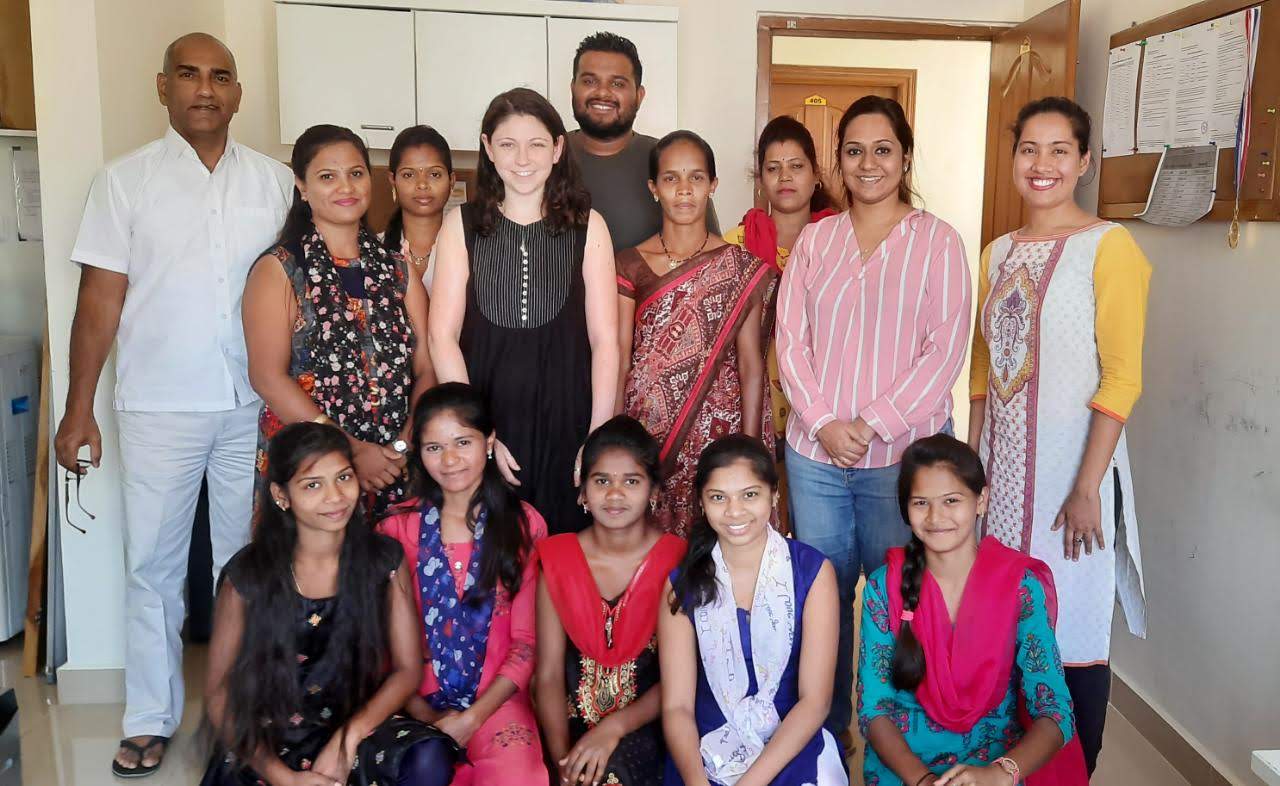
Meiron and some of the GPM India team

Meiron Avidan was born in South Africa and grew up in London. She studied Sociology and Social Policy for her undergraduate degree, and when she graduated she knew she wanted to work abroad to further her understanding of international development work and have the opportunity to immerse herself in a new culture. Meiron worked for GPM as a development intern from September 2019 until July 2020. Since September 2020, she has been studying for a masters in development studies, with the hope of starting a career in international development.

Sunday, October 11, 2020

The Humans of Gabriel Project: Meet Dennis Moses

We are delighted to introduce you to Dennis Moses, GPM's Program Manager! Get to know Dennis and read about his work with local communities in the Kalwa slums.

"Hello, My name is Dennis Moses and I am born and brought up in Mumbai. As a Program Coordinator with Gabriel Project I am responsible for volunteer engagement and ensuring the program runs smoothly! My role involves coordinating volunteer activities and helping them learn about the local culture and the programs in Kalwa they volunteer with. Currently I am also planning the COVID-19 awareness campaigns held in our Love 2 Learn classes and Shravan health centre.

Being a part of the Bene Israel community, it gives me immense pleasure to work with Gabriel Project as I get to meet so many Jewish people from across the world, and to observe "Tikkun Olam" and "Mitzvot" through the service I provide to the communities where we work.

Since Gabriel Project is my first job, the fresh perspective and energy which I bring to the organization is something that sets me apart. Having the opportunity to transform and touch the lives of people we work with is what attracted me to work with Gabriel Project and motivates me each day.

In my role supporting COVID- 19 response activities I have experienced how the lives of people living in the areas where we serve has been greatly impacted. A lot of people are forced to leave the community and go back to their villages, having fewer opportunities and insufficient funds. Children have been left without access to education and no choice other than to remain at home. Non-functioning schools, markets remaining closed, overcrowding of bus services due to railways being closed are some major challenges faced by the people in the community.

However the communities are resilient and the struggles of the COVID- 19 pandemic is enhancing people's patience and they are paying attention to how they can care for one another. "

Thursday, September 17, 2020

The Humans of Gabriel Project: Meet Rekha Kumari

Hello and Namaste! 

I am Rekha Kumari and I am from Jharkhand, but currently living in Mumbai since 2015. Since 2017 I have work as a teacher in the Love2Learn classes of Gabriel Project at the Joshua Greenberger Learning Center. I teach grade four, and English for grades 5-to 8. 

Rekha (in blue) teaching her class


What do you love about your job? 

When I was young, there was a school near where I lived and I used to adore and admire the teachers teaching in the school. I always dreamed of being a teacher someday, and this dream led me to be a teacher with Gabriel Project. The happiness and eagerness of the children to learn something new is what drives me. To fulfill my dream, I completed my master’s degree in English literature and also finished my bachelor’s degree in Education.  When I came to Mumbai, I saw a lot of children are unable to read and write. Now I can see a lot of students improving and I am happy to see and be a part of this evolution.


What have been the greatest challenges during the pandemic? 

It has been very difficult during Covid-19, but Gabriel Project continues to impact the community a lot during this pandemic, providing food to the community and other essential items. Gabriel Project’s work has been so important for the people who lost their jobs. People in the slums have around 5 to 8 members in their family. People live with their children, parents, and their brother, his family and with unmarried sisters. With this this joint family system, the question of feeding and taking care of all the family members persists.


Despite the challenges people in the communities are resilient, and Gabriel Project programs work to maximize this. While conducting Covid-19 awareness campaign, we came across a boy who told us that his father is an alcoholic and his mother is a vegetable vendor. Since the trains are not working, she cannot go to collect and sell vegetables. To support her family, she started working in a Covid-19 rehabilitation centre. She feels happy to see the patients recuperating and going back home with a smile on their face.

Please consider contributing to our work and join Rekha and the rest of the dedicated GPM staff in making an impact to so many. https://www.gabrielprojectmumbai.org/donate


Thursday, August 27, 2020

GPM Launches Infant Malnutrition Program in Remote Villages


 GPM delivered 17 large boxes of medicines and vitamins this week to treat 256 severely malnourished children in the tribal district of Mokhada. The delivery to the Integrated Child Development Services for the first month of malnutrition treatment of Severe Acute Malnutrition (SAM) and Moderate Acute Malnutrition (MAM) infants in remote rural Maharashtra marks the launch of the GPM ‘Bal Balwan – Healthy Child Mission’.

The program was devised in collaboration between GPM and local authorities in response to the COVID-19 lockdown and food crisis that ensued in remote areas of Maharashtra.

Mokhada Government Project Officer Kuldip Jadhav, District Health Officer Doctor Kishor Desale and Local Health Officers Suvarna Patil and Uma Chaudhari were very pleased to receive the life-sustaining medicines that will be delivered to the seven division ‘beats’ of the Mokhada District (Taluka) and prepared for the medicine’s immediate distribution.


"We are most grateful to Gabriel Project for donating these vitamins for 250 SAM and MAM children in the entire Mokhada taluk," said ICDS Project Officer Kuldeep Jadhav. "This will help save the children's lives." 

GPM staff Kenneth Dsouza, Thaiza Dias, and Hemant Pawar joined village ASHA (Accredited Social Health Activist) worker Maya Gade in the first two home visits and treated two moderately malnourished babies. ASHA workers gave a small nutrition training to the children’s parents directing them on the use of the monthly medicine regimen.

GPM will be monitoring and evaluating the malnutrition program along with government health officials for the upcoming year to treat the 259 children in the district and, hopefully eradicate infant malnutrition in the area.


This life-saving program relies on the generosity of donors like you. Please consider supporting this program! 

To support the GPM Emergency COVID-19 Response Fund, please click here: https://www.gabrielprojectmumbai.org/donate